-->
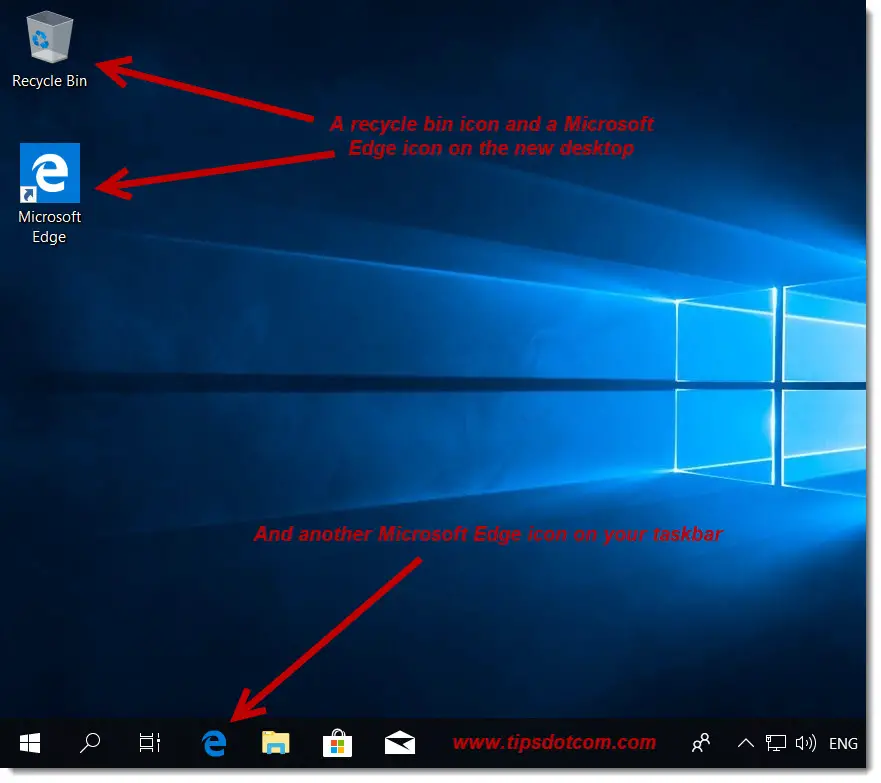
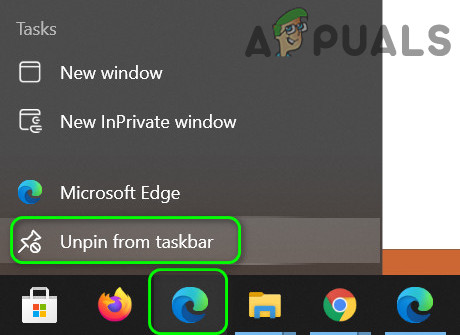
Our other programs in the Microsoft Store that make Windows individual, beautiful and unique. TaskbarGadget - A set of mini-programs on the taskbar offering monitoring of computer parameters HDD & SSD, CPU, RAM, GPU, Network, Battery, Radio, Volume, Weather and providing easy access to numerous functions of Windows OS. Press and hold or right-click any empty space on the taskbar, select Taskbar settings, and then turn on Use Peek to preview the desktop when you move your mouse to the Show desktop button at the end of the taskbar. Open Taskbar settings. Move the mouse pointer over (or press and hold) the far-right edge of the taskbar to see the desktop. I would like to ask why is Microsoft Edge opening another window instead of stacking up in the pinned program in the taskbar? Whenever I start-up Edge, instead of opening on the pinned icon on the taskbar, it opens another one right next to the other icons. It only happens in Edge and not in other programs. This is not big of a deal but it just.
You can pin up to three additional apps to the taskbar. There are two methods to do this:
Taskbar Layout Modification XML method (recommended)
- Supports multivariant images; you can specify different sets of taskbar layouts for different regions.
- Uses a single XML file.
- Is the only method that allows you to add UWP apps to the taskbar.
- In the examples below, the file name “TaskbarLayoutModification.xml” is used, however, you can choose any name you like.
Classic Unattend method (still supported in Windows 10, but marked as deprecated, and may not be available in future builds)
- Uses the Unattend setting: TaskbarLinks
Taskbar links and ordering
The taskbar starts with the following links: Start, Search, and Task View, plus four additional Windows-provided links: Mail, Edge, File Explorer, and Store. These pins cannot be removed or replaced.
OEMs can add up to three additional pinned apps to the taskbar.
For left-to-right languages, the taskbar icons are ordered from left to right (Start, Search, Task View, Windows-provided Pins, OEM-provided pins, Mail).For right-to-left languages, the taskbar icons are in the opposite order, with the right-most element being Start.
Add a default path
To use a Taskbar Layout Modification XML file in Windows, you’ll need to add a registry key (LayoutXMLPath) to the image, and then generalize and recapture the image. The registry key must be processed before the specialize configuration pass. This means you won’t be able to simply add the registry key by using Synchronous Commands/FirstLogonCommands unless you plan to generalize the image afterwards.
We recommend using the file location C:WindowsOEMTaskbarLayoutModification.xml, because this is the default path used for Push-button reset auto-apply folders.
The other shortcut files, apps, and the Taskbar Layout Modification file itself can be changed at any time through regular imaging techniques. You can add this registry key to all your images, even if you intend to add taskbar links using the Classic Unattend method.
Configure taskbarlayoutmodification.xml
Install the Windows image to a technician computer.
After the image boots, go into audit mode by pressing CTRL+SHIFT+F3.
Add the following registry key to define a default location for the Taskbar Layout Modification file:
cmd /c reg add HKLMSOFTWAREMicrosoftWindowsCurrentVersionExplorer /v LayoutXMLPath /d C:WindowsOEMTaskbarLayoutModification.xmlAdd a Taskbar Layout Modification file (TaskbarLayoutModification.xml) in the default location, for example:
C:WindowsOEMTaskbarLayoutModification.xml. We also recommend placing a backup copy of the file atC:RecoveryAutoApplyTaskbarLayoutModification.xmlso it will be restored during a push-button reset.Generalize the Windows image using Sysprep:
Sysprep /generalize /oobe /shutdownBoot to Windows PE.
Recapture the image. For example:
Dism /Capture-Image /CaptureDir:C: /ImageFile:c:install-with-new-taskbar-layout.wim /Name:'Windows image with Taskbar layout'You can now apply this image to other PCs.
To reference your apps
For Classic Windows applications, use shortcut (.lnk) files. We recommend using the same shortcut .lnk files in the All Users Start menu. Example:
For Universal Windows apps, use the Universal Windows app user model ID. Example:
UWA AppUserModelID='Microsoft.Windows.Photos_8wekyb3d8bbwe!App'
To use different layouts for different regions
To use different layouts for different regions, include a region in the defaultlayout tag. These regions use the second half of the language/region tags listed in Available Language Packs for Windows. You can use multiple region tags separated by a pipe (|) character. Here is an example of adding pins to the Chinese (PRC) and Chinese (Taiwan) regions:
How Windows parses the setting for Unattend and Taskbar Layout Modification XML
While you’re transitioning to the new method to customize the taskbar, you may end up using existing images that still include your old Unattend TaskbarLinks settings. When that happens:
- If Windows finds a valid Taskbar Layout Modification XML file, it uses the XML file, and ignores any of the Unattend taskbar settings.
- If the Taskbar Layout Modification XML file isn't found, or is invalid, Windows looks for the old Unattend TaskbarLinks settings. If it finds them, it uses them.
- If Windows can't find either a valid Taskbar Layout Modification XML file, or Unattend TaskbarLink settings, then only the Windows-provided pins and Start, Search, and Task View are shown.
Set transparency for the taskbar
The default transparency setting for the taskbar is 15%. To make Taskbar work with the Dark Mode on OLED displays, you need to set the taskbar transparency to 40%.
To set the transparency for the Taskbar, create a registry key called “UseOLEDTaskbarTransparency” and place it in the following location:
HKLMSoftwareMicrosoftWindowsCurrentVersionExplorerAdvanced
Important
This registry key should only be used to change the taskbar transparency for OLED screens. We do not advise changing the default transparency on non-OLED displays.
Action Center
Most quick action tiles that are pinned in the Action Center are not customizable. You can, however, enable one of the desktop quick action tiles, Color Profile, if more than one color profile is installed on the device. By default, this quick action tile is not available. To let users see Color Profile in the Action Center:
Install at least two ICC color profiles on the primary display. For more information on how to accomplish this, please work with your Microsoft representative.
Add the following registry key to enable the Microsoft.QuickAction.ColorProfile quick action:
HKLMSoftwareMicrosoftWindowsShellOEMQuickActionsColorProfileQuickAction= 0x1 (DWORD)
Microsoft Edge Legacy will stop receiving security updates on March 9, 2021. You can access Microsoft Edge Legacy until April 13. For more information, see Microsoft Edge Product Team’s blog post.

Note
This article applies to the Microsoft Edge Stable channel.
While most organizations will want to replace Microsoft Edge Legacy with the new version, there are some situations where users will need access to both versions. For example:
- Helpdesk and support staff who interact with users who are using either or both versions of Microsoft Edge.
- Developers who support customers who are using either or both versions of Microsoft Edge.
Important
Running Microsoft Edge Legacy side-by-side with the new version of Microsoft Edge is not recommended for use in production. This configuration should only be used in specific cases where testing with both browser versions is required.
The Microsoft Edge Legacy desktop app will reach end of support on March 9, 2021 in favor of the new Microsoft Edge. This means that Microsoft Edge Legacy will not receive security updates after that date. This change is applicable to all experiences that run in the Microsoft Edge Legacy desktop app. Learn more.
Before you begin
Note
Starting with Windows 10 version 20H2 Microsoft Edge Legacy is no longer included. Starting with this version of Windows 10 the side-by-side experience is not supported.
The procedures in this article apply to systems that have been updated with the latest security updates. When the new version of Microsoft Edge is installed, the old version (Microsoft Edge Legacy) will be hidden. By default, all attempts to launch the old version will redirect the user to the newly installed version of Microsoft Edge. This article describes how you can keep using Microsoft Edge Legacy after you install Microsoft Edge.
Quickstart: Side-by-side experience with Microsoft Edge Beta Channel and Microsoft Edge Legacy
Before using the detailed instructions in this article, consider the following two steps to let your users run Microsoft Edge Legacy and the Microsoft Edge Beta channel side-by-side.
Prevent the automatic install of the Stable Channel of Microsoft Edge by Windows Update.
Install the Beta channel of the new version of Microsoft Edge.
Note
Read Additional information for information about Registry Key settings.
This side-by-side solution is less complex and requires less management than the detailed solution described in this article. However, this solution does mean that you'll be running the Beta Channel rather than the Stable Channel.
Side-by-side experience with Microsoft Edge Stable Channel and Microsoft Edge Legacy
Installing the Stable Channel of the next version of Microsoft Edge at the system-level will cause the current version (Microsoft Edge Legacy) to be hidden. If you want to let your users see both versions of Microsoft Edge side by side in Windows, you can enable this experience by setting the Allow Microsoft Edge Side by Side browser experience group policy to Enabled.
This group policy is documented here
To set up the side-by-side browser experience policy:
Install the Policy Definitions from Microsoft Edge for Business.
- Pick the CHANNEL/BUILD and PLATFORM you want to use, and then click GET POLICY FILES.
- Extract the zipped files.
- Copy msedge.admx and msedgeupdate.admx to the
C:WindowsPolicyDefinitionsdirectory. - Copy msedge.adml and msedgeupdate.adml (from the appropriate language/locale directory) to the
C:WindowsPolicyDefinitions[APPROPRIATE LANGUAGE/LOCALE]directory.
Open the Group Policy Editor (gpedit.msc).
Under Computer Configuration, go to Administrative Templates>Microsoft Edge Update>Applications.
Note
If you don't see the Microsoft Edge Update folder, verify that step 1 was completed correctly.
Under Applications, double-click 'Allow Microsoft Edge Side by Side browser experience'. See our best practice guidance before continuing to the next step.
Note
By default, this group policy is set to 'Not configured', which results in Microsoft Edge Legacy being hidden when the new version of Microsoft Edge is installed.
Select Enabled and then click OK.
Setting this policy will set the following Registry Key to '00000001':

- Key:
ComputerHKEY_LOCAL_MACHINESOFTWAREPoliciesMicrosoftEdgeUpdate - Value Name:
Allowsxs - Value Type:
'REG_DWORD'
Best practice guidance

For the best experience, the Allow Microsoft Edge Side by Side browser experience should be enabled before the new version of Microsoft Edge is deployed to your users' devices.
If the group policy is enabled after Microsoft Edge is deployed, there are the following side effects and required actions:
Allow Microsoft Edge Side by Side browser experience won't take effect until after the installer for the new version of Microsoft Edge is run again.
Note
The installer can be run directly or automatically when the new version of Microsoft Edge updates.
Microsoft Edge Legacy will need to be re-pinned to Start or the Taskbar because the pin is migrated when the new version of Microsoft Edge is deployed.
Sites that were pinned to Start or the Taskbar for Microsoft Edge Legacy will be migrated to the new version of Microsoft Edge.
Additional information
Microsoft Edge Taskbar
After the systems are fully updated and the Stable channel of the next version of Microsoft Edge is installed, the following registry key and value is set:
Microsoft Edge Taskbar Icon
Key:
ComputerHKEY_LOCAL_MACHINESOFTWAREWOW6432NodeMicrosoftEdgeUpdateClientState{56EB18F8-B008-4CBD-B6D2-8C97FE7E9062}Key value:
BrowserReplacementImportant
This key is over-written every time the Microsoft Edge Stable channel is updated. As a best practice, we recommend that you DO NOT delete this key to allow users to access both versions of Microsoft Edge.
Microsoft Edge Browser
See also