
Microsoft Office is the name of the suite of common business productivity applications that includes Word for word processing, Excel for spreadsheets, Outlook for email and scheduling, PowerPoint for presentations, and SharePoint for document management, among other applications. This suite of applications has become a common standard: Most people in the business world now use. Dynamics 365 US Government is deployed within Microsoft datacenters in a manner consistent with a multi-tenant, public cloud deployment model; however, client applications including but not limited to the web-user client, Dynamics 365 for tablets, Dynamics 365 for phones, Dynamics 365 for Outlook, Unified Service Desk for Dynamics 365 and any.
- Microsoft Dynamics 365 Modules
- Microsoft Dynamics 365 Pricing
- Crm System
- Microsoft Dynamics 365 Fraud Protection
- Microsoft Dynamics 365 Erp
- Microsoft 365 is a cloud-based service that brings together best-in-class Office productivity apps with advance device management, intelligent security, and innovative web services. Microsoft 365 includes apps such as Outlook, Word, Excel, and PowerPoint along with services such as Exchange, OneDrive, SharePoint, and Teams.
- 'Through Microsoft Dynamics 365 and its seamless interplay with other office products, BI is not just for experts anymore. We make decisions faster based on data we trust, putting us in the position not only to react just in time, but to be one step ahead.' Giacomo Bonora, Dynamics 365 Analyst and Developer.
- Microsoft Dynamics 365 offers a variety of software products for end-to-end business management available both on-premises and in the cloud. Dynamics 365 solutions are capable of bringing you $16.97 to every dollar spent while addressing your resource and process management needs.
| Developer(s) | Microsoft |
|---|---|
| Operating system | Microsoft Windows |
| Type | enterprise resource planning and customer relationship management |
| License | Proprietary software |
| Website | dynamics.microsoft.com |
Microsoft Dynamics 365 is a product line of enterprise resource planning (ERP) and customer relationship management (CRM) intelligent business applications announced by Microsoft in July 2016 and released on November 1, 2016. There are editions available: a Business Edition which includes a Financials application, based on the project code-named 'Madeira', and an Enterprise Edition which comprises several CRM applications (field service, sales, project service automation, and customer service).[1][2][3]
On July 1, 2017, the Dynamics 365 line was repackaged so that the CRM applications are now called the 'Customer Engagement Plan.' The ERP application is now called Microsoft Dynamics 365 for Finance and Operations; however, it is only available as part of the 'Unified Operations Plan,' which also includes the standalone applications Dynamics 365 for Talent and Dynamics 365 for Retail. Together, the two plans form the 'Dynamics 365 Plan.'
Feature applications[edit]
Microsoft Dynamics 365 contains 12 applications:[4]
- Dynamics 365 For Sales – Sales Leaders, Sales Operations
- Dynamics 365 For Customer Service – Customer Service Leaders, Customer Service Operations
- Dynamics 365 For Field Service – Field Service Leaders, Field Service Operations
- Dynamics 365 For Human Resource – Attract, On board, Core HR
- Dynamics 365 For Finance & Operations – Finance Leaders, Operation Leaders
- Dynamics 365 Supply Chain Management - Streamline planning, production, stock, warehouse, and transportation .
- Dynamics 365 For Commerce
- Dynamics 365 for Project Service Automation – Operation Leaders, Project Leaders
- Dynamics 365 For Marketing—Adobe Marketing Cloud, Dynamics 365 for Marketing
- Dynamics 365 Artificial Intelligence – AI for Sales, AI for Customer Service, AI for Market Insight
- Dynamics 365 Mixed Reality – Remote Assist, Layout
- Dynamics 365 Business Central – ERP for SMBs
Microsoft itself uses the Customer Service module to manage the process of updating Windows operating systems to the latest versions.[5]
References[edit]
- ^Foley, Mary Jo. 'Microsoft takes wraps off its 'Madeira' SMB business-management service'. All About Microsoft. ZDNet. Retrieved 7 July 2016.
- ^Sheridan, Kelly (July 7, 2016). 'Dynamics 365 Unveiled, Skype Meetings Launched: Microsoft Roundup'. Information Week. Retrieved 11 July 2016.
- ^Bridgwater, Adrian (July 11, 2016). 'Microsoft Dynamics 365, An ERP CRM Cloud Workflow Combo'. Forbes. Retrieved 11 July 2016.
- ^'Microsoft Dynamics 365'Microsoft website
- ^Foley, Mary Jo (19 August 2019). 'Microsoft is using Dynamics 365 to manage Windows Update releases'. ZDNet. Retrieved 18 September 2019.
_1.svg "Microsoft Dynamics 365")
External links[edit]
- Dynamics Learning Portal (DLP): https://mbspartner.microsoft.com (partners only)
- Idea portal: https://ideas.dynamics.com/ideas/
- CustomerSource: https://mbs.microsoft.com/customersource
- PartnerSource: https://mbs.microsoft.com/partnersource
Why does adoption matter? In the era of digital transformation, dramatic change is the new normal. The most successful companies are already reaping the rewards of digital transformation. Digital transformation enables organizations to attract the best talent, empower employees, and deliver innovative products and services all with streamlined operations—centered around exceptional customer experiences.
But many organizations find the idea of making a digital transformation a challenging one and have been slow to change. That’s why we created the Dynamics 365 Adoption guide.
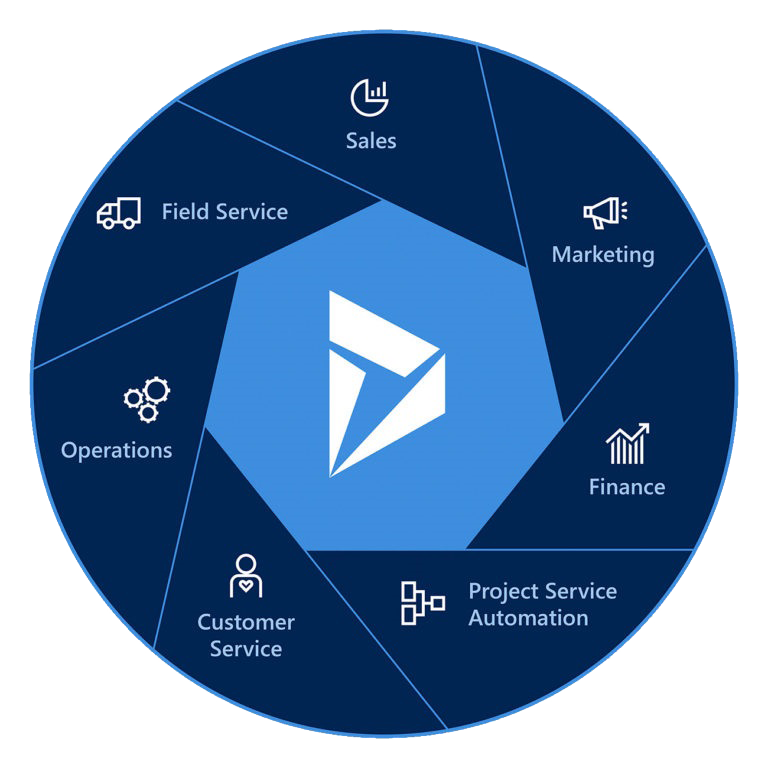
Microsoft Dynamics 365 Modules
Help for you and your team
In this Adoption guide, we’ve compiled an easy-to-follow how-to guide that walks you and your team, step-by-step, through the best way to roll out Dynamics 365 to your organization. The insights here come from our most successful customers, who have maximized the power of their investment, adopting multiple, integrated technologies that now form Dynamics 365. Throughout this guide you will find links to additional tools and resources as well as the Adoption planning workbook where you can build your custom approach to adoption.
Many organizations are currently launching Dynamics 365 technologies and you can connect with them in the Microsoft Dynamics community of experts and peers.
The successful adoption of new technology requires behavior change. And change can be hard. It takes more than learning a new app. It's a fundamentally different way of working. This change is about people. And we're here to help.
We know from experience

The successful adoption of new technology requires behavior change. And change can be hard.
| Finding | Source |
|---|---|
| Change doesn't happen automatically. Most employees don't want to use new technology rolled out by their organization. | Creating organizational transformations, July 2008, McKinsey Quarterly, www.mckinsey.com |
| CEOs matter. When the CEO was engaged, the transformation project was more successful. | SharePoint End-User Study, April 2013, Microsoft Corporation |
| Setting targets is key. A well-defined set of financial and operational targets is a key component to successful transformation. | Microsoft 365 Usage Research, May 2016, Microsoft Corporation |
| Learn from each other. Learning from coworkers is one of the most effective ways to adopt new technology. | CIO Executive Board Business Productivity Database |
Hurdles to success
Among the challenges you should prepare for:
Microsoft Dynamics 365 Pricing
- Launching a new technology is more than a technical migration.
- Employees continue to use technical solutions that are not deployed by IT.
- Technical readiness and user readiness must go hand in hand.
- Your adoption approach can accelerate or impede results.
- Resistance to change is a normal human behavior that needs to be addressed.
- 80 percent of end users admit to using their communication tool of choice.
- Plan, pilot, and deploy both readiness activities together.
- Understand team member personas in order to sell the value of the technology to users.
Successful customers navigate adoption by:
- Defining a vision: Companies were most successful when they had a clearly defined vision and knew how the new technology would be used.
- Getting leadership support: Successful projects obtained proactive support from senior leadership to encourage new technology use.
- Training end users: Organizations used multiple training formats to engage with employees across business units.
- Raising awareness: Top performers used email, employee portals, posters, teaser videos, and newsletters.
Envision, onboard, drive value
Our easy-to-follow Adoption Framework guides you through the adoption process and helps optimize results. Each phase is broken into simple steps that guide you to the best practices, resources, and tools you need to build and deploy a customized adoption approach.
Phase one: Envision
Identify and prioritize scenarios while learning about available resources as you plan for rollout. This stage is critical to your journey because you're setting business goals to measure success. In this phase, you will:
- Assemble your team.
- Define business strategy.
- Determine readiness.
Learn more:Envision
Phase two: Onboard
Work with your key stakeholders to build and launch your adoption plan. Prepare your environment and test your adoption approach with Early Adopters. Use feedback to make adjustments before scaling to the business. In this phase, you will:
Crm System
- Build your adoption plan.
- Launch to Early Adopters.
- Adjust your plan.
Learn more:Onboard
Phase three: Drive value
Full-scale deployment and business success depend on usage and satisfaction. This requires planning through the Envision and Onboard phases plus ongoing operational excellence. In this phase, you will:
- Monitor end-user adoption.
- Measure and report usage.
- Encourage ongoing engagement.
Microsoft Dynamics 365 Fraud Protection
Learn more:Drive value
Microsoft Dynamics 365 Erp
See also